
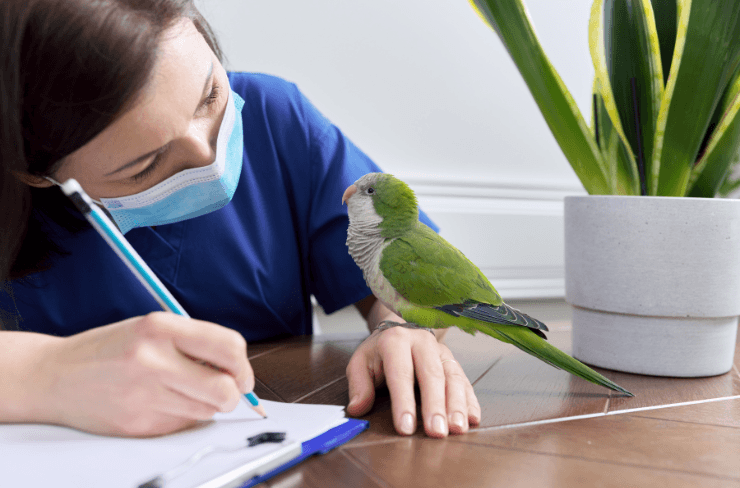
A bird struggling to breathe, collapsing or bleeding needs urgent veterinary attention. Do not wait to see whether they eat a treat or look brighter later. Call an avian vet immediately, describe what you are seeing and ask where to take your bird.
Parrots, budgies and cockatiels can conceal illness, but an emergency is not always preceded by an obvious decline. Knowing which signs require immediate action can help you avoid losing time on home remedies or an online diagnosis.
Emergency Signs That Need an Avian Vet Immediately
The following changes warrant an immediate call and urgent assessment. You do not need to identify the underlying disease before seeking help.
- Breathing difficulty at rest, including an open beak, pronounced tail movement with each breath, or obvious effort to draw air.
- Collapse, seizures, sudden loss of balance or weakness so severe that the bird cannot stand or perch.
- Ongoing bleeding, a serious wound, a collision or an attack by another pet.
- Suspected poisoning or exposure to smoke or fumes, including an overheated non-stick pan.
- Repeated straining, abdominal swelling or tissue protruding from the vent, particularly in a bird that may be laying an egg.
The Association of Avian Veterinarians lists these serious signs as reasons to seek veterinary care immediately. A bird sitting on the cage floor because it is too weak to perch is particularly concerning; this should not be mistaken for resting.

Breathing Trouble Means Handling Must Be Kept Minimal
Watch your bird’s breathing from a short distance before attempting to catch it. Brief panting after exertion is different from sustained effort while resting, but an uncertain cause is a reason to call, not to test their stamina by encouraging more movement.
A distressed bird may need oxygen before a detailed examination. Repeated catching or restraint can add stress. Your avian vet can advise on the safest transfer. Never squeeze the chest when holding a bird, as this restricts breathing.
Injuries and Toxic Exposures Can Be Urgent Before Signs Appear
After an accident, tell the team what happened even if the bird seems alert. A small visible wound does not establish how serious an injury is. If you find blood, distinguish active bleeding from dried blood and avoid disturbing a clot. Merck’s emergency guidance recommends veterinary examination even when bleeding has stopped.
For accessible external bleeding, gentle direct pressure with clean gauze may help while you arrange care, provided this can be done without compromising breathing. Do not attempt to pull a broken feather or apply a tight bandage without veterinary direction.
With suspected fume exposure, move the bird away from the source into clean air if safe, then seek urgent advice. Do not wait for wheezing: dangerous exposure may not produce an obvious smell or a long warning period. Bring the product name or packaging if readily available.
Appetite and Dropping Changes Need Prompt Advice Too

A bird that stops eating, repeatedly vomits or produces far fewer droppings needs prompt veterinary advice, even without the dramatic signs above. Do not use a fixed waiting period such as “another day” to decide whether a small bird is ill enough.
Contact your veterinary clinic and describe actual intake rather than whether the food bowl looks disturbed. Seed husks can make a bowl appear full, while a bird may pick at food without swallowing much. Mention changes in droppings and any recent weight trend.
For less obvious changes in vocalisation, sleep, or interaction, our article on birds hiding illness explains what to look for. These quieter signs still deserve a call; they do not need to progress to the point of collapse before they matter.
Straining Is Not Something to Treat at Home
A female bird can lay eggs without a male. Repeated straining, weakness or swelling may indicate egg binding or another serious problem. Do not press the abdomen, try to remove an egg or give supplements as a substitute for assessment. Tell the team about previous eggs and any change in droppings.
Prepare for Transport While You Call
When searching for an avian vet near me, call ahead to confirm that the receiving clinic can assess birds now. Have your bird’s species, symptoms, onset time and any suspected exposure ready. Our Nightline offers 24-hour telephone advice and triage; it does not replace examination or treatment.
Use a secure, ventilated carrier. If the bird cannot perch, remove high perches and pad the base with a clean towel. Keep the journey quiet, minimise handling and ask the team about appropriate warmth. Do not add uncontrolled heat, especially if the bird is panting or overheated.
Do not force food or water into the beak, give human medicines or use leftover antibiotics. Take a video or photograph only if it does not delay care. The AAV’s first-aid advice emphasises preparation and checking where avian emergency care is available before it is needed.
Know Where to Turn Before an Emergency
Save your bird’s care contacts and keep a carrier ready. Our parrot health guide covers prevention between appointments. If you are concerned now, contact 2Feet4Paws Veterinary Clinic in Dubai for guidance on an avian vet assessment and the appropriate next step.
FAQs
Yes. Taking a favourite food does not rule out serious illness. Breathing difficulty, bleeding, collapse or other emergency signs take priority over apparent appetite.
Brief fluffing during rest can be normal. Persistent fluffing with unusual sleepiness, weakness or reduced appetite warrants prompt advice; inability to perch needs urgent assessment.
Call for advice now. Describe the signs and let the veterinary team advise on urgency and where care is available. Do not wait overnight with breathing difficulty, collapse or active bleeding.
Not every emergency clinic treats birds. Confirm avian capability by phone and ask where to go if the first clinic cannot receive your bird.
