
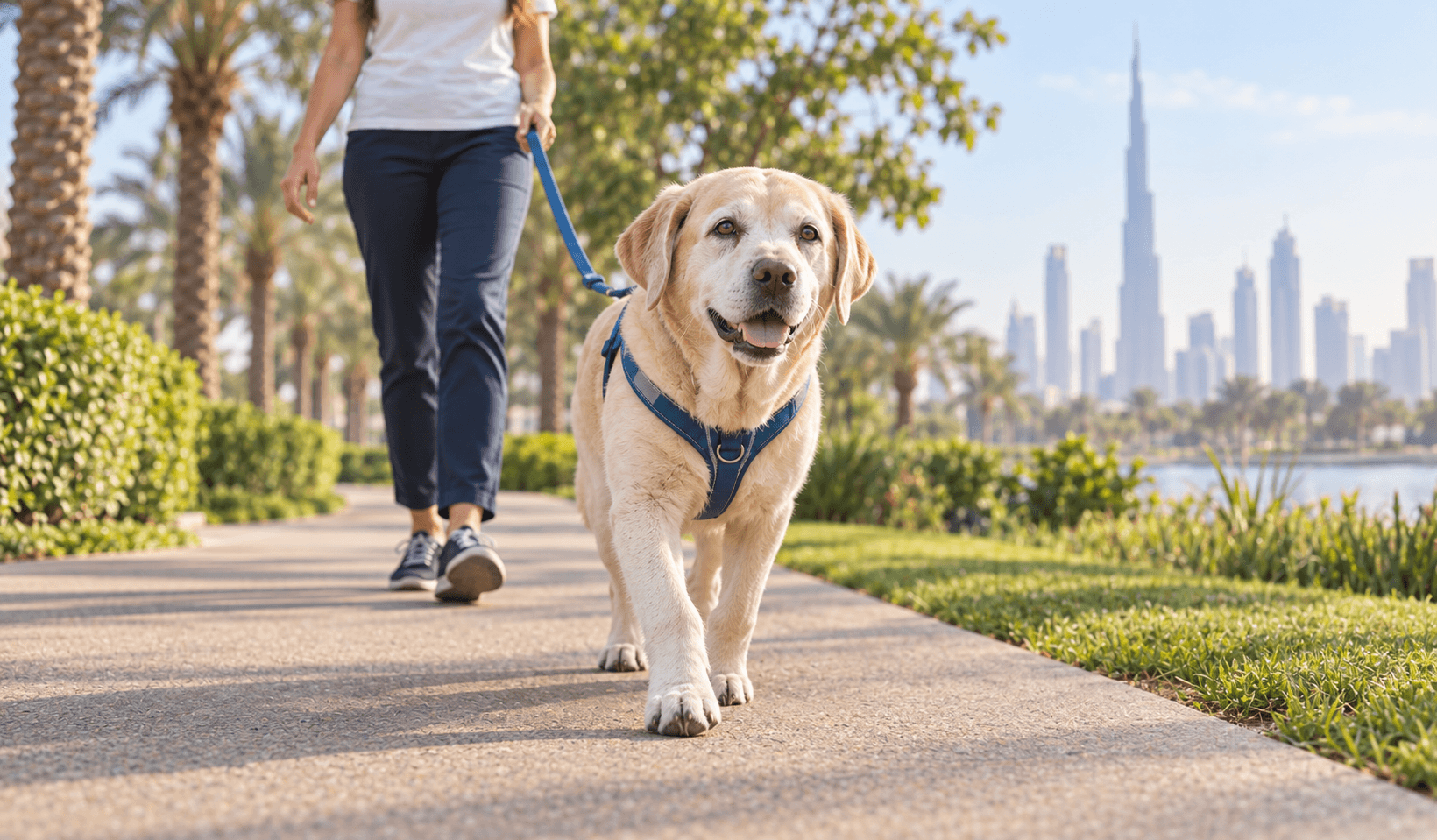
A slower walk can still be a good walk. For an older dog, regular, comfortable movement can help maintain muscle strength, support mobility, and provide opportunities to explore. The routine may simply need to change as their health and abilities change.
With Dubai 30×30 encouraging people to move for 30 minutes a day for 30 days, it is a good opportunity to review your dog’s activity too. However, the human challenge is not an exercise prescription for pets. Your senior dog’s routine should reflect their individual needs, with veterinary advice where health or mobility problems are present.
Why Is My Older Dog Slowing Down? How Your Vet Clinic Can Help

Perhaps your dog takes longer to get up, hesitates at the stairs or turns towards home earlier than usual. These changes deserve attention. Arthritis can cause stiffness, limping, difficulty rising and reluctance to exercise, but it is not the only possible explanation.
Senior dogs can also develop medical conditions that affect their stamina and mobility. A consultation at your vet clinic helps identify the cause and whether your dog needs an adjusted routine, treatment or further investigation.
Before extending walks or starting a new activity, arrange a check to see if you have noticed any changes. A short video of your dog getting up or walking at home can help your vet see difficulties that may be less obvious in the clinic.
How much exercise does a senior dog need?
For many older dogs, several manageable outings are more comfortable than one long walk. Keep activity gentle and consistent, and choose a route that allows you to return home easily if your dog tyres.
Let your dog walk at a comfortable pace. Choose flatter routes with secure footing, and allow pauses to sniff and explore. If their hearing or vision has declined, familiar, quieter surroundings may help them feel more confident.
There is no single walking duration that suits every senior dog. Agree a starting point with your vet clinic based on your dog’s activity, health and comfort. Avoid a sudden increase simply because the weather improves or the family has more time at the weekend.
In Dubai, check the conditions before every walk
Plan outdoor activity around the conditions on the day. Early mornings or evenings may be more suitable when it is warm, but the time alone does not, by itself, establish that a walk is safe. Older dogs are among those at greater risk of heatstroke, and outdoor exercise may need to be avoided on hot days.
Take drinking water, choose shade and check walking surfaces. Pavements, sand and artificial grass can become hot enough to injure paws. If the ground is hot or your dog is struggling with the conditions, choose a cooler indoor activity instead.
Watch for unusually heavy panting, excessive drooling, weakness, confusion or difficulty breathing. Stop activity immediately if your dog is struggling. Suspected heatstroke is an emergency: move them to a cool area, begin cooling with cold tap water while keeping water away from the nose and mouth, and contact a vet immediately. Use air conditioning or a fan, and do not wrap the dog in wet towels.
Indoor activities for senior dogs in Dubai
When outdoor conditions are unsuitable, a comfortable indoor space offers other ways to keep your dog engaged. Choose activities that do not require jumping, sharp turns or rushing across slippery floors.

Options to try, adapted to your dog’s abilities, include:
- An easy scent search: place small pieces of their usual food in accessible spots on a non-slip surface.
- A simple food puzzle: choose one they can use comfortably without awkward reaching.
- A brief training session: practise familiar cues that do not require painful movements.
- Gentle play: keep toys close to the ground and let your dog decide whether to engage.
These activities provide mental stimulation as well as opportunities for interaction. They complement suitable physical activity; they should not be used to push a dog through pain or exhaustion.
Make everyday movement easier
Look at the route your dog takes from their bed to the water bowl, the door and their favourite resting place. If they are slipping, hesitating or repeatedly jumping, small changes may help.
Secure non-slip runners over smooth floors, keep frequently used items easy to reach and provide supportive bedding. A suitable ramp can reduce the need to jump into a car. Dogs needing assistance may benefit from a properly fitted support harness, with guidance on how to use it.
For a dog with arthritis, repeated ball chasing, abrupt turns and jumping may aggravate discomfort. Ask your vet clinic which activities to modify and whether a rehabilitation assessment would help.
Watch how your dog feels afterwards
An enthusiastic dog may continue playing even when the activity exceeds their comfortable limits. Their willingness to chase a toy does not necessarily mean the exercise is suitable.
Notice how they move later that day and after resting. Are they stiffer, slower to rise or less interested in their next outing? Keep a brief record of the activity and any changes in comfort, and share it with your vet. This helps guide adjustments to exercise and pain management.
If your dog develops a limp or has increasing difficulty walking, arrange veterinary attention rather than encouraging them to keep going.
Support comfort with an individual care plan
Exercise is one part of senior care. Maintaining an appropriate body weight and monitoring muscle condition also matter. Ask your veterinary clinic about appropriate portion sizes and how to account for food rewards used in games or training.
For dogs with osteoarthritis, management may combine prescribed pain relief, weight management, home adaptations and rehabilitation. Hydrotherapy or underwater treadmill work may be appropriate for some dogs, but the choice should be based on an assessment of their health and abilities.
Make this month’s goal comfortable movement
For your older dog, use the Dubai 30×30 theme as a reminder to establish a suitable daily routine. That may mean a shorter sniffing walk, a gentle indoor game or a review of the support they need.
If your dog is slowing down, becoming stiff or enjoying walks less, contact 2Feet4Paws Veterinary Clinic to arrange an assessment. Your vet clinic can use your observations and a short video to help guide a plan for comfortable movement.
FAQs
There is no universal 30-minute target for older dogs. The right amount depends on health, fitness and mobility. Some dogs need shorter, more frequent outings. Ask your vet to help establish a comfortable routine.
Arthritis does not automatically mean stopping walks. Regular, controlled activity can help support muscle strength and mobility, alongside appropriate pain management. However, new limping or worsening discomfort needs veterinary assessment; do not force a painful dog to continue.
Try gentle scent games, an accessible food puzzle or a short training session in a cool indoor area with non-slip flooring. Keep activities within your dog’s abilities and avoid jumping or sharp turns. Indoor enrichment can support their routine when outdoor conditions are unsuitable.
Stiffness should not be dismissed as an inevitable part of ageing. It can indicate joint pain or that the current activity is too demanding. Record when it occurs and discuss it with your vet, particularly if it is new or worsening.
