
Ticks rarely choose the easiest place for an owner to notice. They tend to settle where the skin is thin, warm or protected by fur, collars and skin folds. Before feeding, a tick may feel like a tiny seed or rough speck; once engorged, it can resemble a smooth grey-brown lump. Understanding where ticks hide on dogs turns a quick pat into a useful health check.
This matters throughout the year in Dubai. The brown dog tick can transmit Ehrlichia canis, the bacterium responsible for canine ehrlichiosis, and can also establish itself inside homes and kennels. At 2Feet4Paws Veterinary Clinic in Dubai, we help owners combine careful tick checks with appropriate year-round prevention. If you find a tick or your dog seems unwell after possible exposure, a dog vet in Dubai can assess what should happen next.
Why Ticks Choose Hidden Areas on Dogs
Ticks cannot fly or jump. They wait on vegetation or in the environment and climb onto a dog that brushes past. They may crawl across the coat before attaching, which is why the first place they land is not necessarily where you will find them. Protected areas are less likely to be disturbed by movement, grooming or scratching, and thinner skin can make feeding easier.
Long, thick or dark coats make small ticks particularly easy to miss, but short-haired dogs also need a complete check. A glance across the back is not enough. Use your fingertips as well as your eyes, and remember that a tick may be mistaken for a scab, nipple or skin tag. If you are uncertain, do not tug at it. A dog vet in Dubai can confirm what you have found and remove it safely.
Seven Places a Dog Vet in Dubai Recommends Checking
Work in the same nose-to-tail order every time, so no area is forgotten. Concentrate on these common hiding places:
- Around the head: Check the muzzle, lips, chin, eyebrows and carefully around the eyelids. Do not probe inside the eye or ear canal.
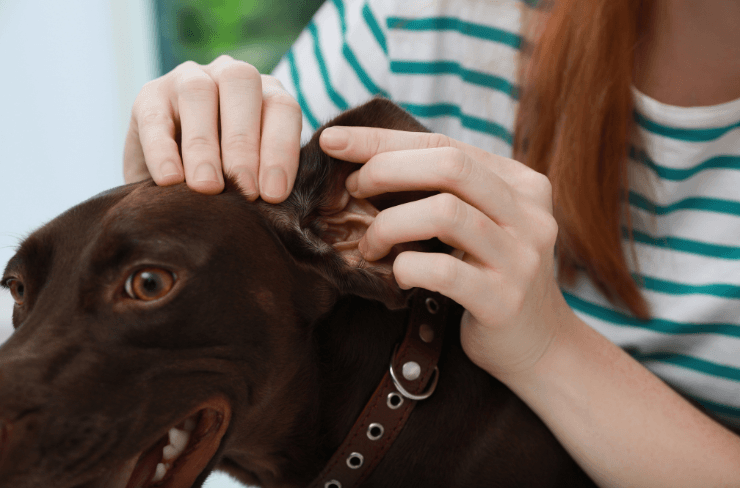
- In and behind the ears: Look along both surfaces of the ear flap and feel where the ear joins the head.
- Under the collar or harness: Remove the equipment rather than feeling around it, then inspect the neck, shoulders and chest straps.
- Under the front legs: Feel through the armpits and around the elbows, where fur and limb position can conceal a small tick.
- Between the toes: Spread each toe gently and inspect the paw pads, nail beds and top of every foot.
- Along the belly and groin: Check the chest, abdomen, the inside of the back legs, and any folds of skin, while recognising normal nipples.
- Around the tail: Inspect the tail base, the area beneath the tail, and the surrounding coat, especially on long-haired dogs.

Ticks can attach elsewhere, too, so run your hands along the back, sides, and legs, and part the coat wherever you feel a bump. Our guide to tick checks and removal after desert walks explains what to do once your dog is home.
How to Perform a Thorough Tick Check at Home
Choose a well-lit area and ask your dog to stand or lie comfortably. Move slowly against the direction of hair growth, separating the coat in small sections while you feel the skin with your fingertips. A comb or brush can help with longer coats, but it does not replace hands-on inspection. Check both sides of the body, then examine the collar, harness and lead before bringing them further into the home.
A tick has a distinct body attached at one point, with its legs clustered near the front, although these can be difficult to see when it is small or buried in fur. A nipple forms part of the skin in a regular paired row, while a scab is usually flatter and irregular. Use a torch or a phone light for a closer look, but ask your pet clinic in Dubai if you cannot confidently identify the lump.
Checks are especially important after time near shrubs, grass, grazing land, kennels or areas visited by other animals. They are most effective when paired with preparation rather than used alone. Before the next outing, read our advice on tick prevention before desert dog walks.
Ehrlichiosis Warning Signs: When to Contact a Pet Clinic in Dubai
Finding a tick does not mean your dog has ehrlichiosis, and many tick bites do not lead to illness. It does mean exposure has occurred. Ehrlichiosis may begin with fever, tiredness, reduced appetite, swollen lymph nodes or reluctance to walk. Some infected dogs appear well during a subclinical phase, while more advanced disease can be associated with low platelet counts, bruising, nosebleeds, pale gums, weight loss or neurological changes.
Symptoms may not appear immediately, so note the date the tick was found and watch your dog over the following days and weeks. Read Protect Your Pets from Ehrlichiosis for more details on how the disease can progress. Contact a dog vet in Dubai promptly if your dog shows any change in appetite, energy, movement, gum colour, or normal behaviour. A veterinary examination and blood tests may be needed, but the appropriate tests depend on the timing and signs.
Collapse, breathing difficulty, uncontrolled bleeding, very pale gums, severe weakness or rapidly worsening symptoms require urgent assessment. Outside normal hours, call the 2Feet4Paws Nightline on 058 567 1776 for calm guidance on whether an emergency vet in Dubai is needed immediately.
Safe Removal and Prevention Advice From a Veterinary Clinic in Dubai
Remove an attached tick promptly with clean, fine-tipped tweezers or a dedicated tick-removal tool. Wear gloves, grasp it close to the skin and pull upwards with slow, steady pressure. Do not crush, burn or cover the tick with oil, alcohol, petroleum jelly or nail polish. Clean the area and wash your hands afterwards. If it is close to the eye, your dog will not stay still, several ticks are present, or the area becomes painful, swollen or discharges fluid, seek veterinary help. To dispose of the tick safely, place it in a sealed container containing rubbing alcohol. Do not place a live tick loose in the bin, as it may crawl out and attach to a pet or person.
Because the brown dog tick can survive indoors, finding repeated ticks may indicate an environmental problem rather than a single outdoor encounter. Wash pet bedding, check other animals and ask a veterinary professional about safe environmental control. Never combine parasite products or change doses without advice, as the right prevention depends on your dog’s age, weight, health and lifestyle.
Make Tick Checks a Familiar Part of Every Walk
A reliable tick check takes only a few minutes once you know the route: head and ears, collar area, front legs, paws, belly, groin and tail. Pair that routine with veterinarian-recommended year-round prevention and pay attention to changes after exposure. If you find a tick or are concerned about possible ehrlichiosis, book an assessment with a dog vet at 2Feet4Paws Veterinary Clinic in Dubai.
