
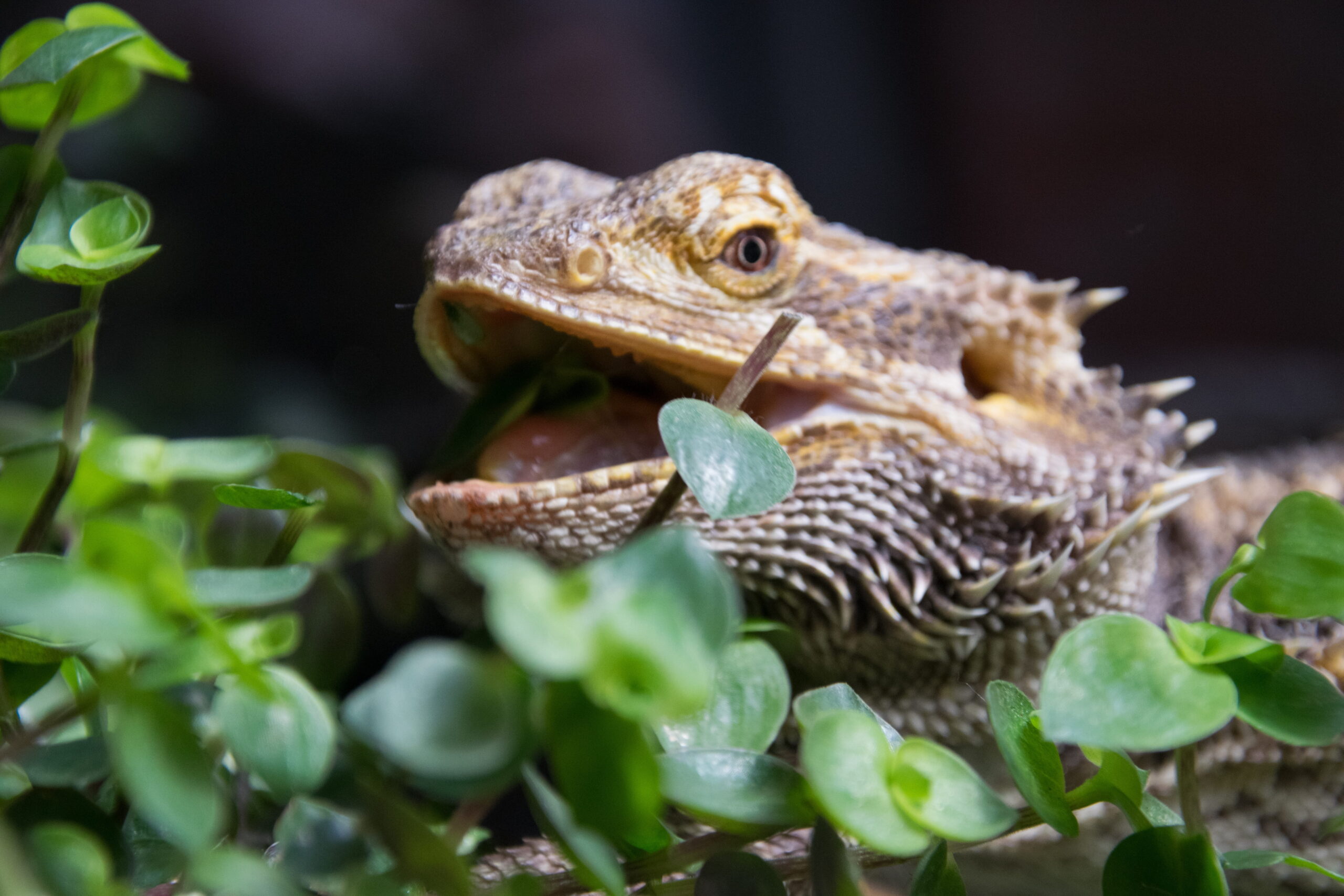
Getting your bearded dragon’s diet right is an important part of keeping them healthy, and the balance changes as they grow. Bearded dragons are omnivores, eating both plant material and insects. Younger dragons need more animal protein to support growth, while adults should eat predominantly plant material. Nutrition cannot be separated from the correct heat and UVB exposure described in our bearded dragon setup guide.
Q: What Should a Bearded Dragon Eat Every Day?
A: A balanced bearded dragon diet combines fresh leafy greens, suitable vegetables and appropriately sized feeder insects, with the proportions changing as the dragon matures. As a general guide:
- Juveniles: approximately 75% insects/live food and 25% vegetables.
- Adults: approximately 75% vegetables and 25% insects/live food.
Juveniles may be offered insects more frequently, while adults generally require insects around two or three times per week. These ratios are starting points rather than rigid rules: age, weight, reproductive status and health can change an individual’s needs.
Q: What Vegetables Can Bearded Dragons Eat?
A: Offer a varied rotation of fresh leafy greens and suitable vegetables rather than relying on one favourite food.
- Collard, mustard, turnip and dandelion greens
- Rocket/arugula, endive and bok choy
- Bell pepper, butternut squash, courgette/zucchini and green beans
- Shredded carrot, with kale in moderation and parsley occasionally

Avoid iceberg lettuce as a staple because it offers little nutritional value. Spinach should be avoided or significantly limited because its oxalates can interfere with calcium availability, and rhubarb should not be fed. Fruit may provide occasional variety, but should not form the main plant component of the bearded dragon diet. Wash produce and remove uneaten food before it spoils.
Q: What Are the Best Insects for Bearded Dragons?

A: Dubia roaches and appropriately sized crickets are useful feeder choices, providing protein and feeding enrichment. A feeder insect should generally be no wider than the space between the dragon’s eyes.
Mealworms and superworms are higher in fat and are better used occasionally rather than as staples; waxworms and butterworms should also be limited. Avoid wild-caught insects because they may carry pesticides, parasites or other hazards. Remove uneaten live insects, as some can bite or stress the dragon.
Q: Do You Need to Gut-Load Feeder Insects?
A: Yes. Gut-load feeder insects for approximately 24 to 48 hours before feeding. This means providing the insects with nutritious food and hydration so their welfare and nutritional value improve before they are offered to the dragon.
Q: Does a Bearded Dragon Need Calcium Supplements?
A: Yes. Supplementation remains important even with appropriate UVB lighting, but more is not automatically better. The 2Feet4Paws care guide recommends the following starting schedule:
- Calcium without vitamin D3: at most feedings.
- Calcium with vitamin D3: one or two times per week.
- Multivitamin: once per week.

Lightly dust insects and some salads rather than coating them heavily. The right plan depends on age, diet, UVB output and health, so avoid over-supplementing. Poor calcium balance, inadequate UVB and unsuitable temperatures can contribute to metabolic bone disease. If you are uncertain, an exotic vet in Dubai can tailor the schedule.
Q: How Should a Bearded Dragon Get Water?
A: Provide fresh water daily in a stable, shallow bowl placed at the cooler end. Some dragons drink readily from a bowl; others respond more to water droplets or moisture on washed greens. Keep the bowl clean and replace contaminated water promptly.
Bathing is sometimes used by owners, but it is not a substitute for accessible drinking water, and some dragons find it stressful. Any dragon placed in water must be closely supervised because reptiles can drown.
Top Tip: Know What Is Normal for Your Beardie
One of the simplest things you can do at home is record your dragon’s weight regularly. Also learn their normal appetite, activity, stools and behaviour. A feeding diary can reveal whether the balance of greens, insects and supplements has drifted, while a weight trend may expose change before appearance alone does.
Q: How Can I Tell If My Bearded Dragon Is Unwell?
A: Changes in appetite, activity, weight, breathing, stools or movement can indicate that your bearded dragon needs veterinary attention. Contact an experienced exotic veterinarian if you notice:
- Lethargy, weakness, reduced appetite or unexplained weight loss
- Swollen joints, curved limbs, difficulty moving or spontaneous fractures
- Open-mouth breathing when not basking, or nasal discharge
- Persistent loose stools, unusual lumps or masses
Reptiles can hide illness, so persistent or combined changes should not be dismissed. These signs can have several causes and cannot be diagnosed from the diet alone.
Q: Can Bearded Dragons Carry Salmonella?
A: Yes. Bearded dragons can carry Salmonella bacteria without appearing unwell. Wash your hands with soap and water after handling the dragon, its food or anything in the enclosure. Keep reptile equipment away from kitchens and food-preparation areas, and supervise children’s hygiene carefully.
Good Nutrition Is Preventive Care
There is no single food that creates a healthy bearded dragon diet. Variety, an age-appropriate balance between plant and animal foods, properly used supplements, good UVB exposure, and the right temperatures all work together.
If you are unsure whether your beardie’s food or supplement plan is appropriate, or you have noticed changes in appetite, weight or behaviour, the 2Feet4Paws Veterinary Clinic exotics team can help. Book a health check or diet and husbandry review, and bring details of the foods, supplements and UVB equipment you use. You can also contact the clinic to arrange an appointment.
Need help with the enclosure, too? Return to Bearded Dragon Care in Dubai: The Essential Setup Guide.
