
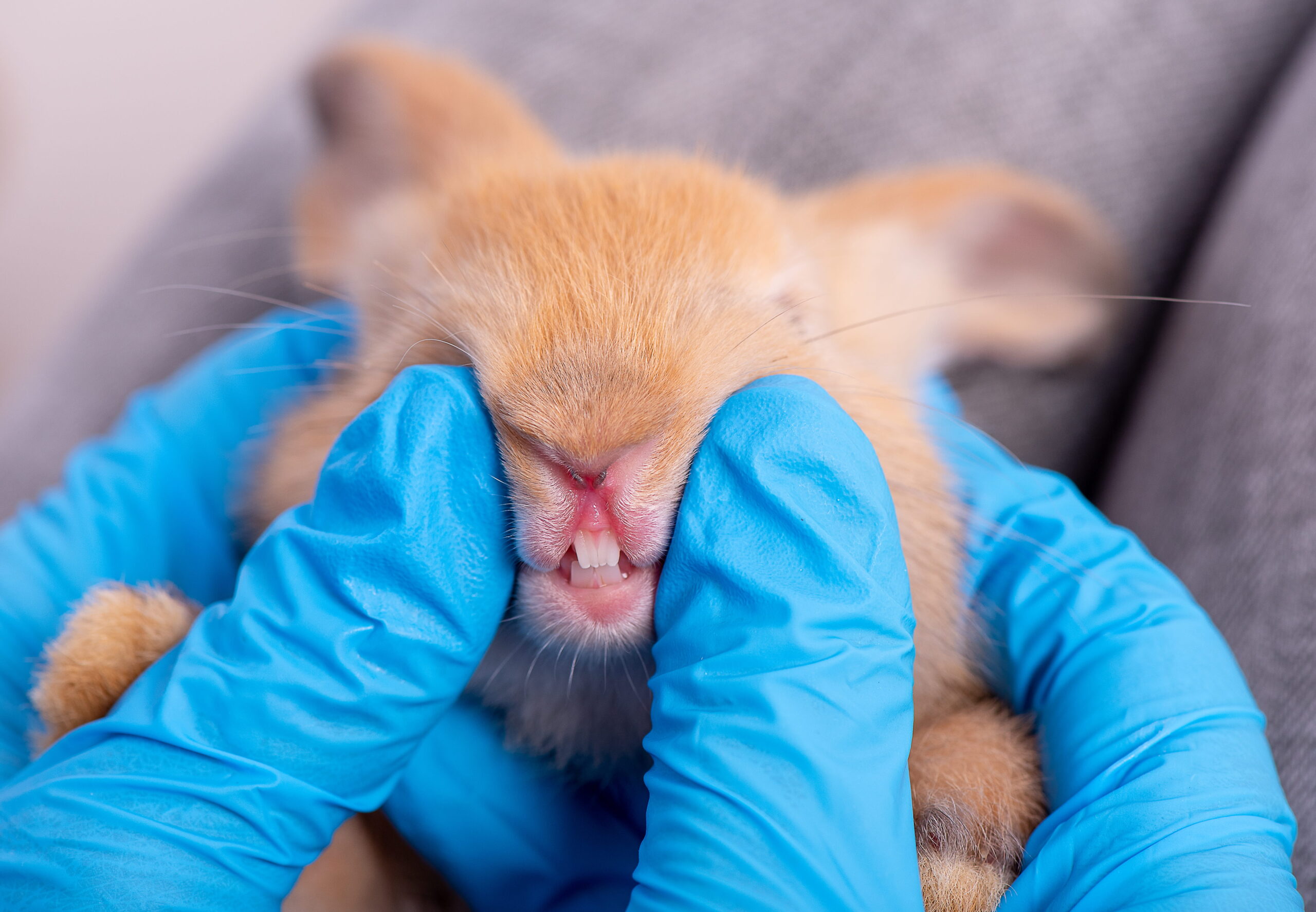
Many rabbit owners are surprised to learn that their rabbits’ teeth never stop growing.
Unlike people, cats, and dogs, rabbits have continuously growing incisors and molars throughout their lives. In the wild, they spend many hours every day grazing on coarse grasses and fibrous plants. This constant side-to-side chewing naturally wears down their teeth, keeping them at the correct length and allowing them to eat comfortably.
Domestic rabbits rely on exactly the same process. When natural tooth wear doesn’t occur, dental disease can develop slowly – often without obvious signs until the problem has become painful and advanced.
As specialists in exotic pet care, we regularly treat rabbits with dental disease at Two Feet Four Paws Veterinary & Exotic Clinic. One of the biggest challenges is that rabbits instinctively hide pain. As prey animals, showing weakness would make them vulnerable in the wild, so they often continue behaving as normally as possible until they can no longer compensate.
By the time many owners notice that something isn’t right, the disease may already be affecting eating, digestion, weight, and overall health. Understanding the early warning signs and seeking advice from a trusted veterinary clinic in Dubai can make a significant difference to your rabbit’s long-term well-being.
Why Rabbit Teeth Need Special Attention as Part of Exotic Pet Care
Rabbits belong to a group of animal exotics with very specialised dental anatomy.
Their incisors and molars grow continuously throughout life, meaning healthy teeth depend on natural wear every single day. Unlike dogs or cats that bite up and down, rabbits chew using a distinctive side-to-side grinding motion. It is this movement, combined with long-strand fibre from hay and grasses, that gradually wears the teeth into the correct shape.
Hay is therefore much more than simply a source of nutrition – it is one of the most important tools for maintaining healthy rabbit teeth.
When rabbits consume too little hay or fill up on pellets instead, they spend far less time chewing. Over weeks or months, the teeth may begin to grow unevenly, allowing sharp enamel points – known as dental spurs – to develop along the molars. These spurs can rub painfully against the tongue and cheeks, making every mouthful increasingly uncomfortable.
Unfortunately, the back molars are hidden deep inside the mouth, so owners usually cannot see these changes themselves.
Rabbit Dental Disease Often Starts Long Before You Notice It
One reason dental disease is so common is that rabbits are remarkably adaptable.
Rather than stopping eating altogether, many rabbits simply change how they eat.
For example, a rabbit experiencing mouth pain may:
- Eat pellets eagerly but leave most of its hay.
- Take much longer to finish meals.
- Drop food while chewing.
- Select softer vegetables rather than tougher, fibrous foods.
- Stop eating certain foods completely.
Because the rabbit is still eating something, many owners assume everything is normal.
In reality, this gradual reduction in hay consumption often allows dental disease to worsen, creating a cycle in which painful teeth lead to less chewing, which in turn causes even less natural tooth wear.
Signs of Rabbit Dental Disease That Veterinary Clinics Want Owners to Know
Many owners expect overgrown front teeth to be the first sign of dental disease. However, the most significant problems usually develop in the molars at the back of the mouth, where they cannot be seen without a proper examination.
Watch for:
- Eating more slowly than usual
- Choosing softer foods and avoiding hay
- Dropping food from the mouth
- Reduced appetite
- Weight loss
- Excessive drooling or a constantly wet chin
- Smaller or fewer droppings
- Poor grooming or an untidy coat
- Persistent watery eyes
- Swelling around the jaw or face
- Becoming quieter or hiding more than usual
These signs often develop gradually, making them easy to dismiss as normal ageing or fussy eating. Any persistent change deserves assessment by an experienced vet clinic, particularly if your rabbit has begun avoiding hay.
The Surprising Link Between Rabbit Teeth and Runny Eyes

Many rabbit owners are surprised to discover that persistent watery eyes can actually be caused by dental disease.
The roots of the upper cheek teeth sit extremely close to the tear ducts. When these tooth roots become elongated due to abnormal growth or infection, they can exert pressure on the ducts, preventing tears from draining normally.
Instead of draining into the nose, tears overflow down the face, creating the appearance of an eye problem.
Although eye infections can certainly occur, recurring watery eyes that do not improve should always prompt a thorough dental assessment, as treating the eye alone will not solve an underlying tooth problem.
Why Dental Disease Can Become a Medical Emergency
Dental disease is not simply a problem affecting the mouth.
Painful teeth often cause rabbits to eat less, particularly less hay. Because rabbits rely on constant food intake to keep their digestive system moving, even a short reduction in eating can have serious consequences.
When food intake slows, the digestive tract also slows. This can progress to gastrointestinal stasis – a potentially life-threatening condition in which normal gut movement significantly decreases or stops altogether.
Without prompt treatment, rabbits can deteriorate very quickly.
Advanced dental disease may also lead to:
- Tooth root infections
- Jaw abscesses
- Chronic facial pain
- Significant weight loss
- Digestive disturbances
- Reduced quality of life
Jaw abscesses are particularly challenging because they often develop around infected tooth roots and may require ongoing treatment.
Early diagnosis is always preferable to treating advanced disease.
How Rabbit Dental Disease Is Diagnosed
Because many dental problems occur at the back of the mouth, diagnosis often requires more than a quick visual examination.
Your veterinarian may recommend:
- A full oral examination
- Careful assessment of the incisors and molars
- Monitoring body weight and body condition
- Evaluation of eating habits and droppings
- Skull radiographs or advanced imaging, where appropriate
In some rabbits, sedation may be necessary to allow the back teeth to be examined safely and thoroughly.
Regular examinations at an exotic veterinary clinic can identify early changes before they become severe, allowing treatment to begin while the condition is still manageable.
Preventive Exotic Pet Care Helps Protect Rabbit Dental Health
Fortunately, many rabbit dental problems can be significantly reduced through good husbandry and preventive veterinary care.
Feed Unlimited Hay
Around 80–85% of a rabbit’s diet should consist of good-quality grass hay. This provides the fibre needed to support both healthy teeth and healthy digestion.
Don’t Let Pellets Replace Hay
Pellets should supplement, not replace, the diet. Rabbits that fill up on pellets spend far less time chewing and are at greater risk of developing dental overgrowth.

Encourage Natural Chewing
Rabbit-safe forage, untreated branches, grass-based enrichment, and suitable chew toys all encourage healthy chewing behaviour and provide valuable mental stimulation.
Monitor Weight Regularly
Gradual weight loss is often one of the earliest signs that a rabbit is struggling to eat comfortably. Regular weigh-ins help identify subtle changes before they become obvious.
Schedule Routine Health Checks
Many dental problems cannot be detected at home because they develop in the back teeth.
Routine examinations at a veterinary clinic help identify small issues before they become painful, complex, or expensive to treat.
When Should You Contact Your Vet?
Arrange a veterinary appointment if your rabbit:
- Stops eating hay
- Eats noticeably less than usual
- Produces fewer droppings
- Develops a wet chin
- Has persistent watery eyes
- Loses weight without explanation
- Shows swelling around the face or jaw
- Appears quieter or less active than normal
The earlier treatment begins, the better the outcome is likely to be.
Healthy Teeth Mean a Healthier Rabbit
Dental disease remains one of the most common yet overlooked conditions affecting pet rabbits.
Because rabbits instinctively hide discomfort, owners often notice only subtle changes in eating habits, grooming, behaviour, or droppings. Recognising these early signs – and acting promptly – can prevent painful complications and significantly improve a rabbit’s quality of life.
At Two Feet Four Paws, we provide advanced exotic pet care for rabbits and other animal exotics, helping owners prevent, diagnose, and manage dental disease before it impacts their pet’s well-being.
Year-Round Support with the Arabian Hare Membership
Our Arabian Hare Membership has been created to make routine rabbit care easier year-round. It includes an Annual Health Check with a Health & Husbandry Review, two nail clips, and an Annual Digestive Health Faecal Screen. Members also receive savings on selected products and services, including dental treatments and procedures.
These regular check-ins are a useful opportunity to review your rabbit’s weight, diet, eating habits, dental health, and general well-being, and to pick up on any changes that may need closer inspection.
Find out more about the Arabian Hare Membership and what’s included.
