
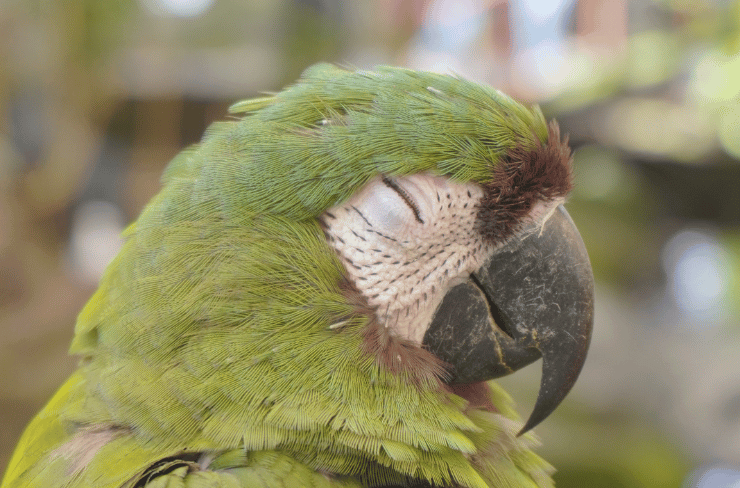
A bird may still greet you, vocalise or take a favourite treat while pain or illness is developing. By the time the change becomes unmistakable, the bird may have been compensating for longer than the owner realises. This is why a search for an avian vet near me often begins with a small behavioural difference rather than an obvious medical emergency.
Knowing your bird’s normal routine is one of the most useful parts of preventive exotic pet care. A quieter morning, a different perch or less enthusiasm for interaction may be the first clue that something hurts or that the bird is unwell.
Why Birds Conceal Weakness
Many companion birds are prey species. In the wild, visible weakness can attract predators or alter how flock members respond, so birds have evolved to suppress outward signs for as long as possible. Living in a home does not remove that instinct.
Masking does not mean there are no signs. It means the signs may be brief, subtle or easy to explain away. A bird can also adjust its activity to conserve energy, which may appear calm rather than uncomfortable. The Royal Veterinary College’s guidance on recognising pain, therefore, focuses on changes from the individual bird’s normal behaviour.
Behavioural Changes That May Indicate Pain or Illness
Pain does not create one universal bird behaviour. Species, personality, age and the location of discomfort all affect the response.
Watch for a pattern or a combination of changes such as:
- Becoming quieter, vocalising less or producing a different call
- Sleeping more, closing the eyes during active periods, or spending longer fluffed up
- Avoiding toys, training, handling or interaction that the bird normally enjoys
- Becoming withdrawn, unusually tame, irritable or more likely to bite
- Perching lower, shifting weight, favouring one foot or sitting on the cage floor
- Preening less, over-preening one area or holding a wing differently
None of these behaviours identifies the cause on its own.

Also to note – Birds may behave differently when they know you are nearby, so observing them from across the room can sometimes reveal subtle changes in posture, breathing or activity. Even a short video can be useful for showing your veterinarian if something doesn’t seem quite right.
Pain or behavioural changes may be associated with injury, foot or joint disease, reproductive problems, digestive disease, breathing difficulty, infection, nutritional illness or toxin exposure. Our broader guide to signs of pain in exotic pets explains why behaviour should be interpreted alongside physical changes.
Look Beyond Behaviour Alone
Behaviour becomes more meaningful when you compare it with appetite, droppings, breathing and weight. Notice whether the bird still eats its normal foods rather than only a favourite treat. Check whether droppings have changed in number, colour or consistency, and watch for soiling around the vent or face.
Breathing should be quiet and effortless at rest. Tail bobbing with each breath, open-mouth breathing, wheezing, or repeated neck stretching may indicate respiratory distress. Regular weighing on an accurate digital gram scale can help identify a downward trend that may not be obvious beneath the feathers. Weigh at a similar time of day and record the result rather than relying on memory.
Diet, air quality, sleep, hygiene and enrichment can influence a bird’s health, but a husbandry issue should not be assumed to be the whole explanation. Read Common Parrot Health Problems and How to Prevent Them for more details on nutritional, feather and respiratory concerns.
When to Contact an Avian Vet Near Me
Contact an avian veterinarian promptly if you notice an unexplained change from your bird’s normal behaviour, particularly if it persists, recurs or occurs alongside another physical sign. Birds can deteriorate quickly, so it is safer to call for advice than to wait for signs to become more obvious. Seek urgent advice if your bird:
- Has laboured or open-mouth breathing, marked tail bobbing or blue or grey discolouration of normally pink tissues, where visible
- Cannot perch, repeatedly falls, is very weak or remains on the cage floor
- Stops eating or drinking, vomits repeatedly or produces far fewer droppings
- Has active bleeding, a seizure, a collapse or a sudden loss of balance
- Strains repeatedly, has a swollen abdomen or may be having difficulty laying an egg
Keep the bird calm and limit unnecessary handling while arranging care. Do not give human pain medicine or force-feed unless a veterinarian has specifically instructed you to do so. Birds can deteriorate quickly, and home treatment can delay diagnosis or create additional risk.
What to Record Before the Appointment
A short record can help the veterinarian understand a change that is not obvious during the consultation. Note when it began, whether it is constant, what the bird ate, recent weights, droppings and any changes to the home, diet or routine. A brief video of unusual movement, breathing or vocalisation can be useful when it is safe to record. Do not delay leaving for an urgent appointment to collect evidence.
Depending on how stable the bird is, the veterinarian may first observe its posture, behaviour and breathing before handling it. A physical examination commonly includes weight and body condition assessment, and examination of areas such as the eyes, beak, mouth, feet, feathers, and abdomen. Depending on the findings, the veterinarian may recommend blood tests, faecal testing or diagnostic imaging. Searching for an exotic veterinary clinic near me should therefore include checking that the clinic routinely treats birds and can provide species-appropriate diagnostics.
Small Behavioural Changes Deserve Attention
Bird owners do not need to diagnose pain at home. Their most valuable role is to notice what has changed and act before the bird can no longer compensate. If your bird is behaving differently or showing any physical warning sign, an avian vet near me can assess whether pain, illness or an environmental problem may be involved. Contact 2Feet4Paws Veterinary Clinic in Dubai to arrange an avian health check.
FAQs
Compare the current behaviour with the bird’s normal routine. Reduced interaction, altered vocalisation, increased sleep, guarded movement, or a change in perching can be significant, particularly when more than one change occurs.
No. Birds may fluff briefly while resting or regulating temperature. Prolonged fluffing during an active period, especially with closed eyes, poor appetite or altered breathing, deserves prompt veterinary advice.
Regular weight records can reveal changes that feathers hide. Ask your veterinarian how often to weigh your species and what degree of change is concerning, as normal ranges differ greatly between birds.
Birds have distinct anatomy, handling needs and disease patterns. When reviewing results for avian bird vets near me, confirm that the veterinarian regularly examines birds and has access to appropriate equipment and diagnostic support.
Contact a clinic promptly for a persistent change and urgently for breathing difficulty, collapse, seizures, inability to perch, active bleeding or refusal to eat. If you are uncertain, call and describe the signs rather than waiting for them to become obvious.
