
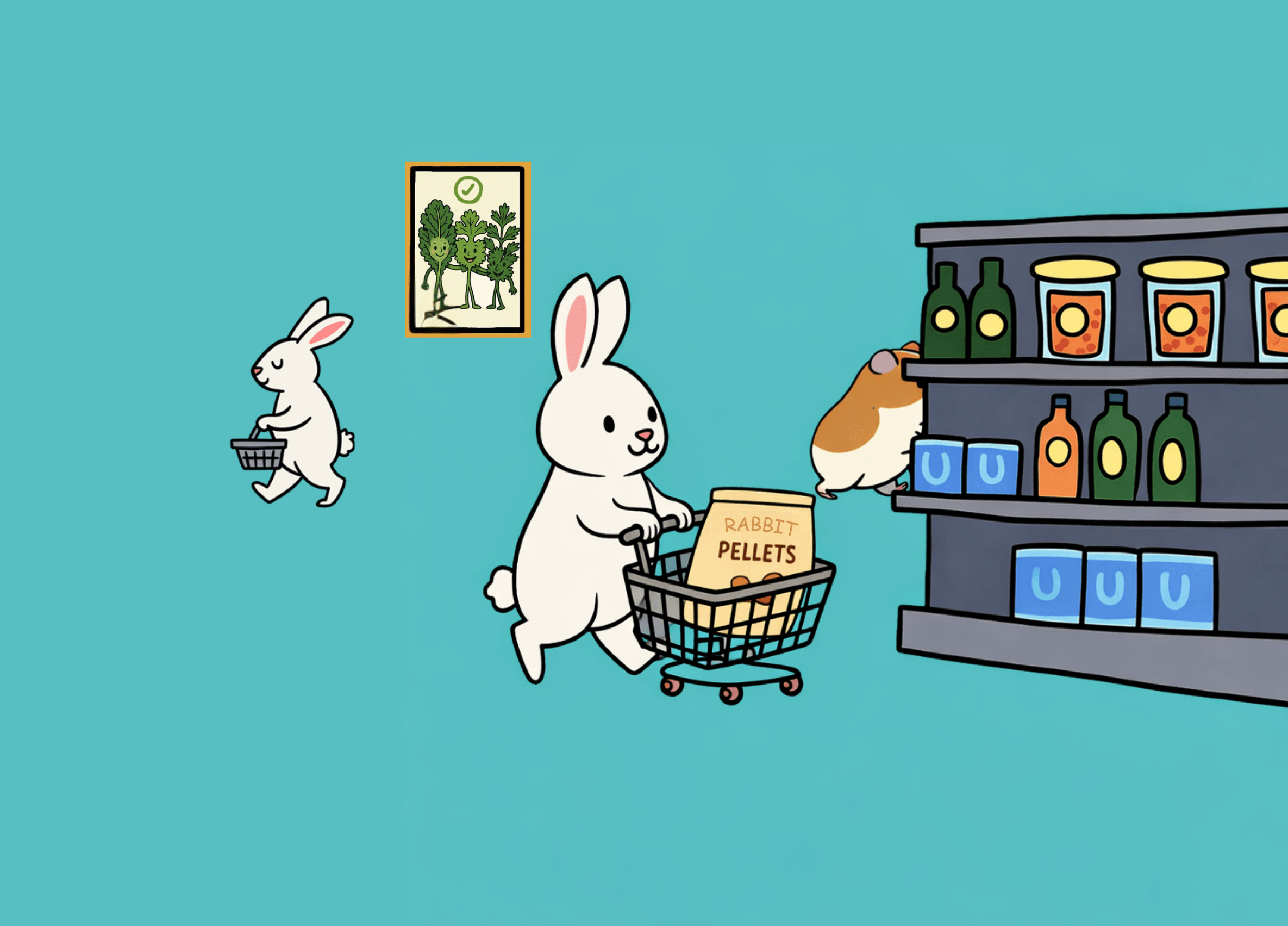
Rabbits may seem easy to feed, but their diet is one of the most misunderstood aspects of their care.
Many common feeding habits, even those done with good intentions, can lead to serious health problems over time. Dental disease, digestive issues, and obesity are all closely linked to what rabbits eat on a daily basis.
At 2Feet4Paws Veterinary Clinic in Dubai, we often see rabbits brought in with preventable conditions that stem from diet. The good news is that with the right understanding, most of these issues can be avoided entirely.
Why Diet Matters More Than You Think
A rabbit’s digestive system is delicate and highly specialised. Unlike dogs or cats, rabbits rely on a constant intake of fibre to keep their gut moving properly.
Their teeth also grow continuously throughout their lives, which means chewing the right types of food is essential to prevent overgrowth and painful dental problems.
When a rabbit’s diet is unbalanced, the effects are often gradual but serious. Reduced appetite, smaller droppings, weight changes, or behavioural shifts can all be early signs that something is not quite right.
The Foundation of a Healthy Rabbit Diet
A rabbit’s diet should be simple, consistent, and fibre-rich.
The majority of what they eat should be hay, supported by fresh greens and a small portion of pellets. Treats and sugary foods should be kept to an absolute minimum.
A balanced rabbit diet should include:
- Unlimited access to good-quality hay, such as timothy or meadow hay
• A daily selection of fresh leafy greens
• A small measured portion of high-fibre pellets
• Constant access to fresh, clean water
Hay is the most important part of the diet. It supports digestion, maintains healthy gut movement, and helps naturally wear down teeth.

Foods Rabbits Should Avoid
Many foods that seem harmless can actually cause serious digestive upset in rabbits.
Foods to avoid include:
- Sugary fruits in large quantities
• Processed human foods
• Bread, crackers, or cereals
• Iceberg lettuce, which has little nutritional value
• Sudden diet changes without gradual introduction
Rabbits have sensitive digestive systems, and sudden changes can disrupt the balance of gut bacteria, leading to conditions such as gastrointestinal stasis, which can become life-threatening.
Common Diet-Related Health Problems in Rabbits
Poor nutrition is one of the leading causes of illness in pet rabbits.
Some of the most common issues we see at our exotic pet clinic in Dubai include dental disease, where teeth become overgrown or misaligned due to inadequate chewing, and digestive problems such as reduced gut motility or complete stasis.
Rabbits may also develop obesity when fed too many pellets or treats, which can place additional strain on their joints and overall health.
Because rabbits often hide signs of illness, these conditions are sometimes only noticed once they have progressed. Early changes in eating habits, droppings, or behaviour should always be taken seriously.
Supporting Your Rabbit’s Health Long-Term
Good nutrition is one of the most effective ways to protect your rabbit’s long-term health.
Alongside diet, regular check-ups with an experienced exotic vet in Dubai help identify early signs of dental or digestive issues before they become serious.
Consistency is key. Rabbits thrive on routine, and small, steady habits in feeding and care often lead to the best outcomes.
When to Seek Veterinary Advice
If your rabbit stops eating, produces fewer droppings, or seems quiet or uncomfortable, it is important to act quickly.
Digestive issues in rabbits can escalate rapidly, and early intervention from a trusted veterinary clinic in Dubai can make a significant difference.
At 2Feet4Paws, we provide advanced veterinary care for rabbits and other exotic pets, combining clinical expertise with a calm and compassionate approach to handling these sensitive animals.
For after-hours emergencies, our 2F4P Nightline offers guidance – helping you decide on the next steps and arrange urgent care if required. Save the number 058 567 1776
A Simple Approach That Makes a Big Difference
Feeding a rabbit correctly does not need to be complicated, but it does need to be consistent.
A diet built around hay, supported by fresh greens and careful portioning, helps maintain healthy digestion, proper dental wear, and overall well-being.
With the right care, rabbits can live long, comfortable lives, and small changes in diet today can prevent serious health issues in the future.
