
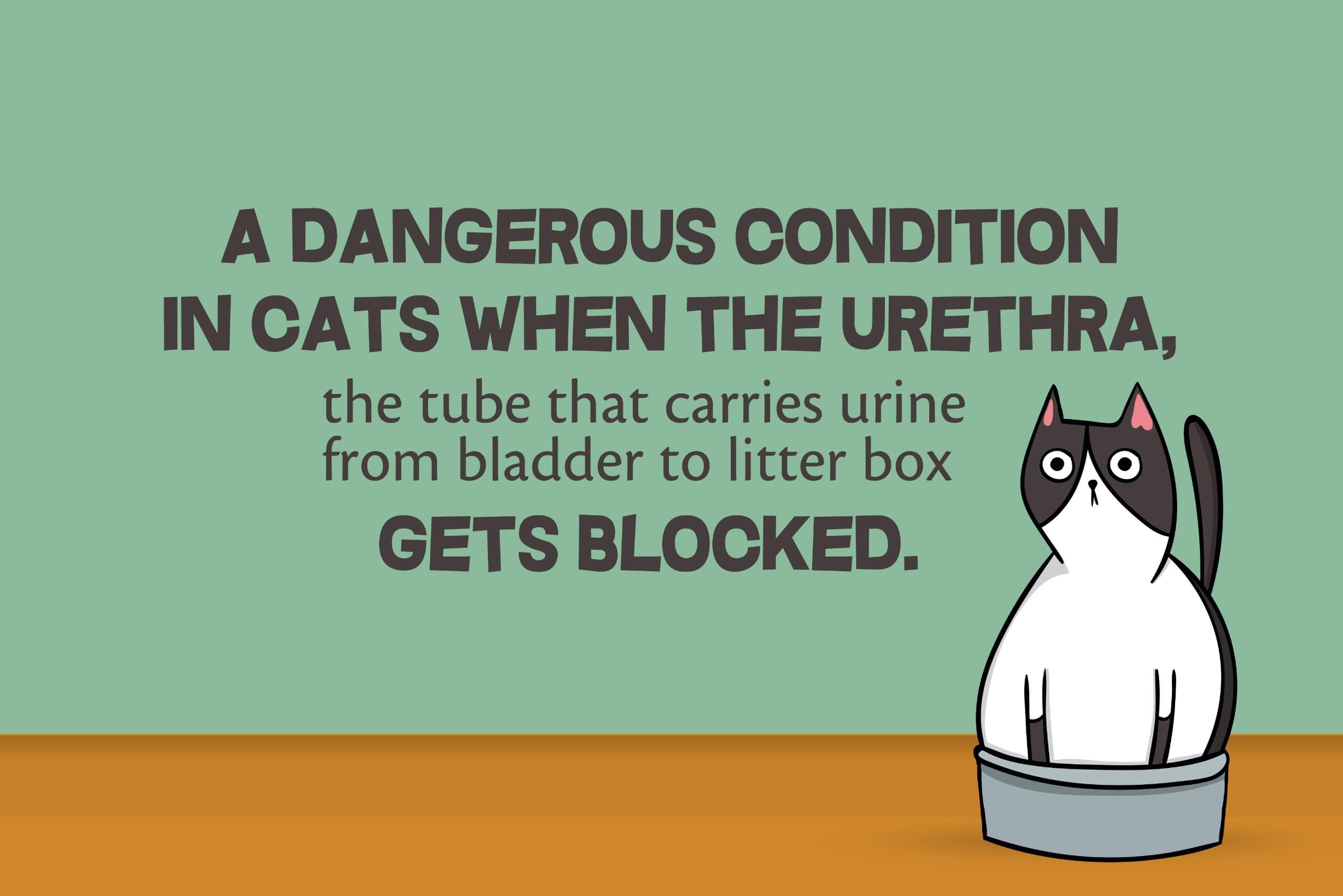
A cat that cannot pass urine is facing a life-threatening veterinary emergency.
When urine flow stops, toxins that should normally be excreted from the body begin to build up rapidly in the bloodstream. Within a short period of time, this can lead to severe illness, dangerous electrolyte imbalances, organ failure, and, in some cases, can sadly become fatal if treatment is delayed.
Veterinarians commonly refer to this condition as a “blocked cat.” It occurs when the urethra, the narrow tube that carries urine from the bladder to the outside of the body, becomes obstructed.
This emergency is most frequently seen in male cats because their urethras are longer and narrower than those of females. As a result, even a small blockage can completely stop urine from passing.
At 2Feet4Paws Veterinary Clinic in Dubai, we have seen a recent increase in cases of urinary blockage. Understanding the warning signs and acting quickly can make a life-saving difference.
Signs Your Cat May Have a Urinary Blockage
The early signs of a blocked cat can sometimes appear subtle at first, which is why many owners assume their cat is simply experiencing mild discomfort or constipation. However, these symptoms should never be ignored.
A cat experiencing a urinary blockage may show:
- Repeated trips to the litter tray
- Straining or pushing when trying to urinate
- Passing only very small amounts of urine or none at all
- Crying, vocalising, or appearing distressed in the litter tray
- Excessive licking of the genital area
- Hiding, restlessness, or visible signs of pain
- Vomiting, lethargy, or collapse in advanced stages
Sometimes the only visible sign is that your cat seems uncomfortable or unsettled. During a veterinary examination, we often find the bladder is large, firm, and painfully full, confirming that urine cannot pass normally.

If you notice any of these signs, it is important to contact a cat vet in Dubai immediately.
Why a Blocked Cat Is a Veterinary Emergency
A urinary blockage is not a condition that can safely wait overnight or be monitored at home. When urine cannot leave the body, toxins such as potassium build up rapidly in the bloodstream. These changes can affect the heart, kidneys, and other vital organs within hours.
Without treatment, the condition can quickly become critical. With prompt veterinary care, however, many cats recover well. This is why every veterinary clinic in Dubai treats urinary blockages as an emergency requiring immediate attention.

If your cat is straining to urinate or producing little to no urine, you should contact a veterinarian as soon as possible.
Emergency Care from Your Cat Vet in Dubai
If you suspect your cat may be blocked, do not wait to see if the symptoms improve. Contact the 2Feet4Paws Nightline Emergency Service immediately so our team can guide you and arrange urgent care if necessary.
Early treatment allows veterinarians to relieve the blockage, stabilise the cat, and prevent serious complications. Our experienced cat vet in Dubai team understands how frightening these situations can be for owners, and we are here to provide calm guidance and expert care when your pet needs it most.
For non-urgent appointments, general advice, or routine consultations, please visit our Contact Page to reach the clinic during normal hours. Acting quickly during a urinary emergency can make a critical difference to your cat’s recovery.
